Only with You:
Flowers and Insects
Flowers and insects make a strong team — together, they help keep the world alive. Flowers provide food: they produce nectar and pollen. Insects carry out pollination. When they collect nectar from flowers, pollen also brushes onto their bodies, and they carry it to flowers of the same species. Only then can fruits and seeds develop — and only then do humans and animals have food to eat.
Around half of all insects are pollinators. Some of them pollinate many different flowers; others have adapted over generations to particular flowering plants. In these cases, insect and plant can survive only together.
Insects in Austria
Threats

The Fantastic Four Insect Orders
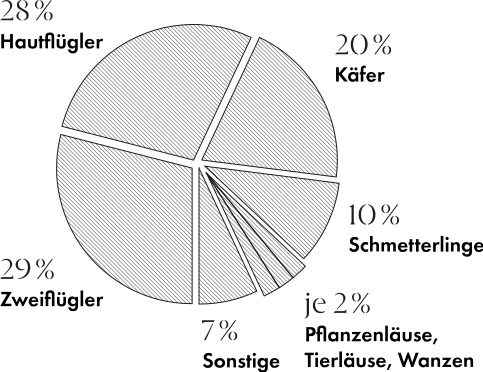
More than 40,000 insect species live in Austria. 87 per cent of them belong to the four orders Diptera, Hymenoptera, Coleoptera and Lepidoptera. The pollinators among them feed on flower nectar and on honeydew, a sugary substance produced, for example, by aphids and scale insects.
29% Diptera
Diptera prefer small, scentless flowers in delicate colours. They include hoverflies, which have very short mouthparts and find their food in open flowers.
28% Hymenoptera
Hymenopterans such as bees and wasps are the most important pollinators. They land on blue, violet and yellow flowers that provide a good landing platform. Bumblebees reach the pollen grains by using a trick: they vibrate until the pollen is released.
20% Coleoptera
Around 7,300 beetle species occur in Austria. Beetles have poor eyesight but a very good sense of smell. Strongly scented flowers attract them. Because they have no proboscis or only a very short one, they visit open flowers with abundant nectar.
10% Lepidoptera
With their long proboscises, butterflies and moths can reach nectar even in narrow floral tubes. Butterflies mainly visit red, blue and yellow flowers, while moths prefer white and pastel-coloured flowers with a strong scent.