Beekeeping
with the Dark European Honey Bee
Industrial beekeeping aims for high yields. It relies on bee races such as the Carniolan honey bee (Apis mellifera carnica) or the bred Buckfast bee, both of which begin collecting nectar early in the year. The beekeepers in Naturpark Kaunergrat have switched to the Dark European honey bee (Apis mellifera mellifera), known in Tyrol as Braunelle. This rare, old honey bee race is well adapted to the climate of the Kaunertal valley. It lives in smaller colonies than the Carniolan and Buckfast bees and collects less nectar. This allows wild bees to coexist with it in the same near-natural habitat.
The Dark European Honey Bee in Numbers
15.000 - 20.000
Dark honey bees
500
colonies
15,000–20,000 dark honey bees form one colony. In the Buckfast bee, a colony may contain up to 80,000 individuals. 500 colonies of the Dark European honey bee live in the Kaunertal valley. That is 40 per cent of the Austrian population.
Honey

100
litres per year
1/12
teaspoon per bee
A honey bee colony produces around 100 litres of honey per year. It needs 80 litres itself; 20 litres remain for the beekeeper. A single bee produces 1/12 of a teaspoon of honey during its lifetime.
Activity
3 weeks
later than the Carniolan honey bee
This protects it against late cold spells.
Bees in Austria
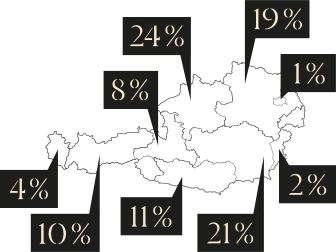
There are currently around 420,000 bee colonies in Austria, most of them in Upper Austria (24%), Styria (21%) and Lower Austria (19%). The number one bee race is still the Carniolan honey bee. Because of their higher productivity, however, more and more commercial apiaries are switching to the Italian honey bee and the Buckfast bee. Even when colony numbers remain the same, this greatly increases the number of honey bees and the amount of pollen needed to rear them. This pollen is then no longer available to wild bees, which places additional pressure on their populations.
One Honey Bee, Four Races
Worldwide, there are nine bee species. In Europe, the western honey bee (Apis mellifera) occurs in the following four bee races:

Dark European honey bee
Apis mellifera mellifera
The Dark European honey bee is the only honey bee originally native to the northern side of the Alps. Keeping it is more compatible with wild bees than keeping other bee races.

Carniolan honey bee
Apis mellifera carnica
The Carniolan honey bee comes from south-eastern Europe. Because of its higher productivity, it has displaced the Dark European honey bee in many parts of Europe over recent decades.

Italian honey bee
Apis mellifera ligustica
From the Italian Peninsula, this diligent nectar collector has spread around the world. Today, it is the most widely kept honey bee in the world.

Caucasian honey bee
Apis mellifera caucasica
This bee race from the Caucasus and north-eastern Turkey is similar to the Carniolan honey bee.

Buckfast bee
The Buckfast bee is a bred race developed by the British monk and beekeeper Brother Adam through systematic cross-breeding of natural races.