Butterflies and moths
Lepidoptera
Butterflies and moths are delicate, brilliantly coloured and extraordinarily diverse — true eye-catchers in the insect world. They have inhabited the Earth for around 200 million years. Today, about 175,000 species have been recorded worldwide, and there are probably twice as many that have not yet been described scientifically. In Austria alone, 4,071 species have been recorded: 215 butterflies and 3,856 moths. In Tyrol, there are 2,623 species, including 170 splendid butterflies and 2,453 more inconspicuous moths.
Moths
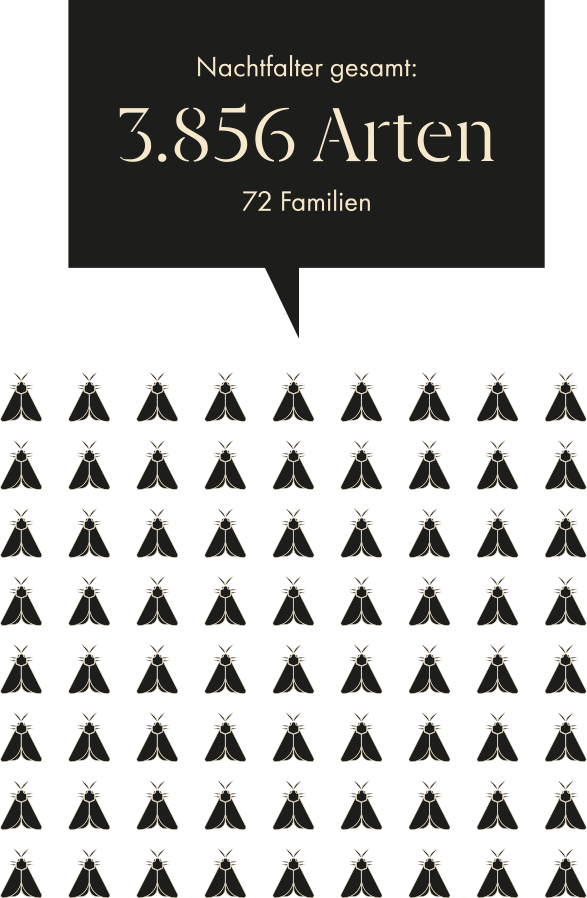
Their Latin designation Heterocera — “different horns” — hints at just how varied the thousands of moth species are. The term arose in contrast to butterflies, and so it includes many families that are only distantly related to one another. This diversity is clearly visible in the great variety of moth antennae.
Butterflies
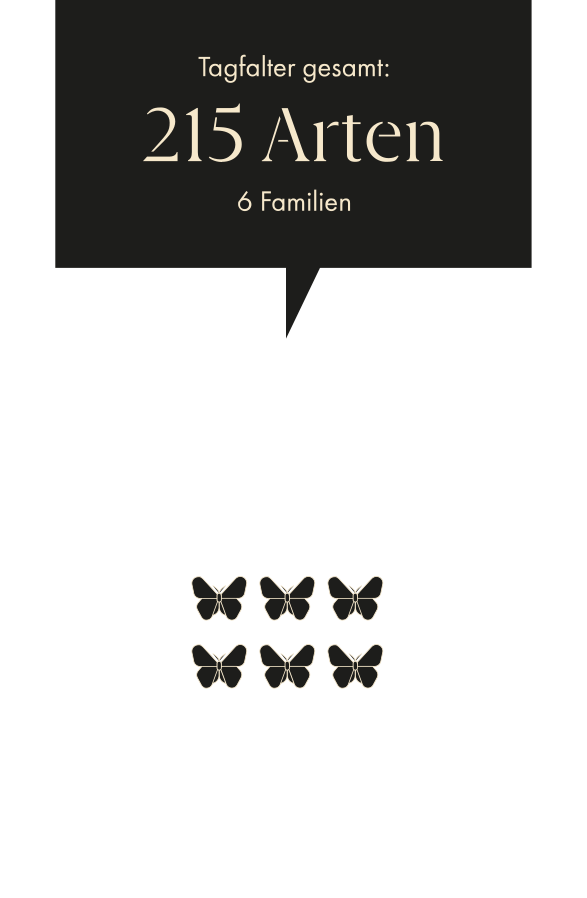
All lepidopteran species that fly by day are butterflies. Their outward appearance can vary greatly in colour, pattern, wing shape and size. In fact, however, all butterfly species are closely related to one another.
Antenna Shapes
Moths
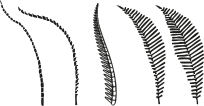
Moths have highly varied antennae, for example thread-like, toothed, serrated, fringed or feathered.
Butterflies

Butterflies have antennae with club-shaped tips.
Wings at Rest
Moths
Moths fold their wings almost exclusively roof-like over the body towards the rear, or hold them stretched out to the sides.
Butterflies
Butterflies fold their wings upright above the body when at rest. This also helps them with thermoregulation.