Too Bright, too Toxic, too Uniform
Butterflies and Moths in Decline
Butterfly and moth species are anything but fickle. They are often closely tied to particular habitats and remain faithful to their sites. Because they are so specialised, they react very sensitively to environmental change. Their presence or absence therefore tells us a great deal about the condition of their natural habitats.
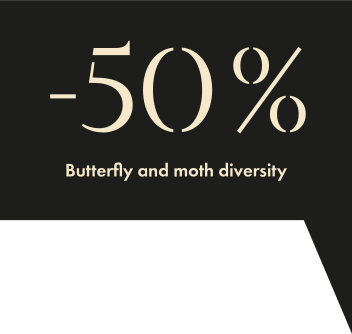
Human activities place especially heavy pressure on butterflies and moths. Soil sealing, monocultures, the abandonment of grassland management, light pollution and the use of pesticides are causing a dramatic decline in species numbers. In Europe alone, half of all butterfly and moth species have disappeared within just 30 years. This makes them among the most threatened animals in the world.
Soil Sealing
In Austria, around 12 hectares of land are newly built over every day — with roads, housing and commercial buildings, tourism infrastructure and leisure facilities. As plant diversity disappears, butterflies and moths vanish as well.
Intensive Agriculture
Intensively managed grassland is poor ground for biodiversity. In the worst case, only a few species
Pesticides
Pesticides such as glyphosate-based herbicides are used, for example, in fruit growing. When the wind carries them into neighbouring areas, they also affect the flora and fauna there.
Monoculture Forestry
Monoculture forests such as pure spruce stands do not provide good conditions for biodiversity. Even though forest conversion towards greater diversity has begun, large areas in Austria are still monocultures.
Abandonment of Grassland Use
When traditional forms of grassland use such as grazing are abandoned, mountain meadows and dry grasslands become overgrown with woodland. Species that depend on open habitats lose their habitats.
Light Pollution
Streetlights, illuminated advertising and domestic lighting confuse nocturnal butterflies and moths. Light pollution is one of the main reasons for the decline of these species.