Red-backed Shrike
Lanius collurio
The red-backed shrike (Lanius collurio) needs large numbers of insects and other small animals as food, as well as a lookout from which to spot them. It finds all this in the mountains, in managed nutrient-poor meadows with thorny shrubs. For this songbird, blackthorn, sea buckthorn and hawthorn provide ideal nesting sites and natural larders. When food is abundant, it impales prey on thorns so that it can eat it later. The belief that it first kills exactly nine animals before eating them is a myth. Even so, this misconception gave the bird its German name.
1 – Black Mask
Male red-backed shrikes have a black stripe across the eyes — almost like Zorro’s mask.
2 – Tool-like Beak
The beak, with its hooked tip, is a practical tool for catching, tearing apart and impaling prey.
3 – Mouse and Grasshopper on a Thorn
Anything not eaten immediately — large insects, small mammals and other prey — is impaled on thorns. Before feeding, the shrike tears the food apart. Indigestible parts are left behind.
4 – Varied Diet
Red-backed shrikes feed on insects, which they often catch in flight, as well as on small mammals and small reptiles.
5 – True size
From head to tail tip, the red-backed shrike measures 18 cm.
Family
Laniidae, shrikes
Genus
Passeriformes, perching birds
Migration Behaviour
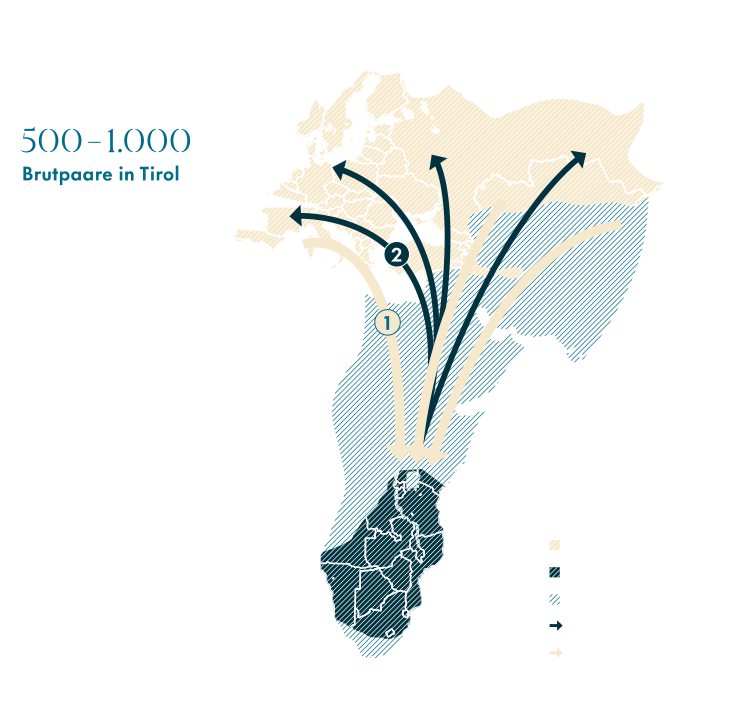
Red-backed shrikes spend the winter in the thornbush and dry savannas of northern and eastern South Africa. They cover these long distances at speeds of up to 75 km/h. With rapid wingbeats and short gliding phases, they move in an undulating flight pattern. On the outward and return journey they follow a loop migration route: the return journey (2) takes place much farther east than the outward journey (1). In Tyrol, an average of 500 to 1,000 breeding pairs were recorded between 2010 and 2018.
Threats and Conservation

The red-backed shrike is currently listed as not endangered on the Red List of threatened species. However, its population is declining across Austria because structurally rich habitats are becoming less common.
Preferred Altitudinal Range

The red-backed shrike occurs at elevations from 470 metres up to a maximum of 2,200 metres above sea level. On average, it is found at around 900 metres.